
Do Florida Sellers Have to Disclose Everything? The Truth About Seller Disclosure Forms in South Florida
By Jacqueline Salcines, Esq.
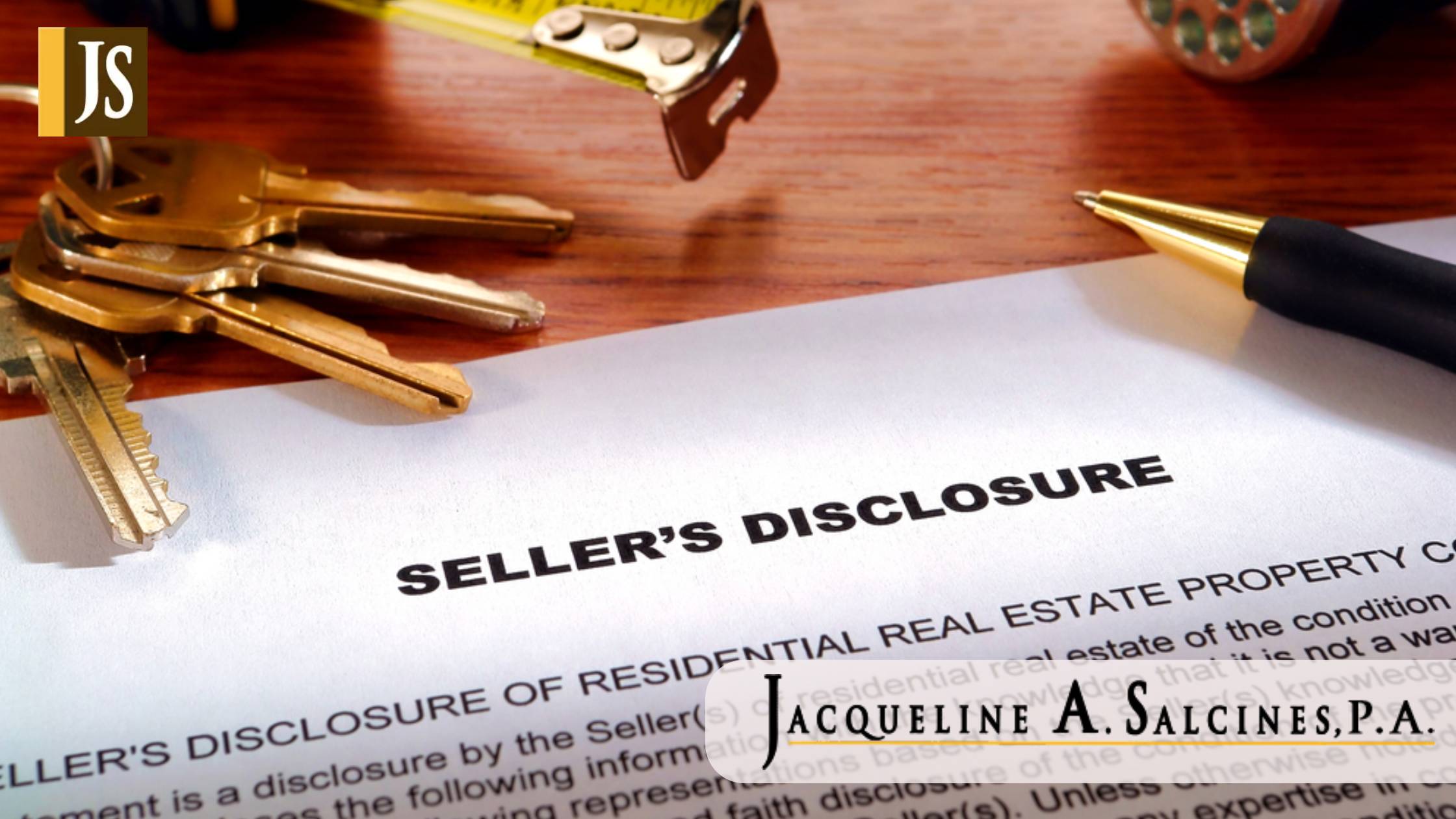
If you’re preparing to sell real estate in South Florida, you may have heard of the “Seller Disclosure Form” — a document that outlines known material defects in a property. But here’s what many sellers don’t realize: Florida law does not require a standardized, written disclosure form.
That’s right. Unlike states like California, where sellers must complete extensive multi-page questionnaires covering every aspect of the home, Florida law takes a different approach — one that offers both opportunity and potential legal risk.
As a South Florida real estate attorney with over 26 years of experience, I help sellers navigate the fine line between legal obligation and liability protection.
⚖️ What Does Florida Law Require?
Florida follows the rule set in Johnson v. Davis, a landmark case in which the Florida Supreme Court held that:
A seller of residential real property has a duty to disclose any known facts that materially affect the value of the property and are not readily observable or known to the buyer.
In simpler terms, while Florida sellers don’t have to fill out a disclosure form, they must disclose:
- Known defects or issues
- That are material (significant)
- And not easily visible to the buyer
Examples may include roof leaks, mold issues, past flooding, or structural damage — if you know about it, and it affects value, you must say so.
🆚 Florida vs. California: A Tale of Two Disclosure Systems
California is one of the most regulated states when it comes to real estate disclosures. Sellers are legally required to complete documents such as:
- Transfer Disclosure Statement (TDS)
- Natural Hazard Disclosure (NHD)
- Lead-Based Paint Disclosure
- Multiple addenda depending on location
These forms are rigid, exhaustive, and uniform across the state.
Florida, on the other hand, allows more flexibility. There is no required state form, although the Florida Realtors® Residential Seller’s Property Disclosure is commonly used. Still, this form is optional and often driven by Realtor preference — not the law.
🧠 Why Legal Guidance Matters
Just because the form isn’t required doesn’t mean sellers are off the hook. In fact, failure to disclose known defects can lead to serious legal consequences, including:
- Breach of contract claims
- Fraud or misrepresentation lawsuits
- Rescission (cancellation) of the sale
- Attorney’s fees and damages
As a seller, you’re walking a fine line: disclose too little, and risk a lawsuit; disclose too much or inaccurately, and invite questions or delays.
At Salcines Law, we counsel sellers on how to:
- Comply with Florida disclosure law
- Strategically complete optional forms
- Protect themselves through smart contract language
- Reduce post-closing liability exposure
📍 Selling in South Florida? Let’s Do It Right
Before you list your home, make sure your legal bases are covered. As an attorney, accountant, and title agent, I help sellers move confidently and securely — every time.
📞 Contact Attorney Jacqueline Salcines today for seller-side legal guidance that protects your interests long after closing.